McMullen Engineering

Load Frame Experiments - Finite Element Models
I have experience teaching strength of materials and mechanics of materials. The mechanics of materials course was essentially an advanced strength of materials course. There were labs associated with both courses involving strain gauge application to different specimens and subsequent testing on Instron electromechanical load frames. While working in the Mobil Research Lab I performed triaxial tests on compressor driven Instron load frames. I ordered test specimens with different materials and geometries for students to run in the labs. I wanted the students to compare strain gauge data with LVDT results.
I decided to run finite element models of the student load frame experiments with the Adina finite element software. To model load frame experiments FEM software must hane nonlinear capability. Material, geometric, and contact nonlinearities must be captured in finite element modeling of load frame tests. I was amazed by the capability and stability of Adina software results using relatively simple meshes.
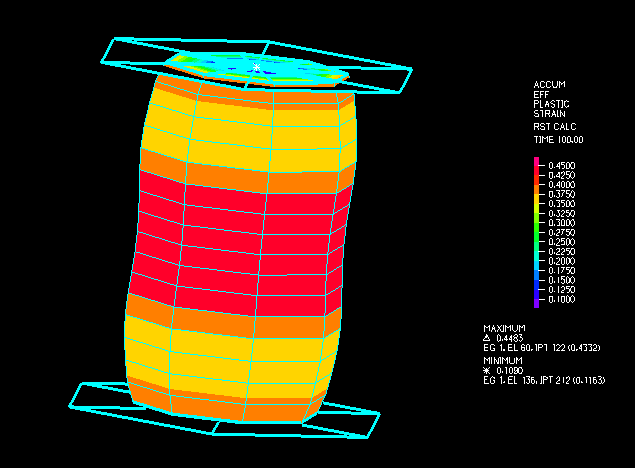
Plastic strain of a specimen with double-barrelling.
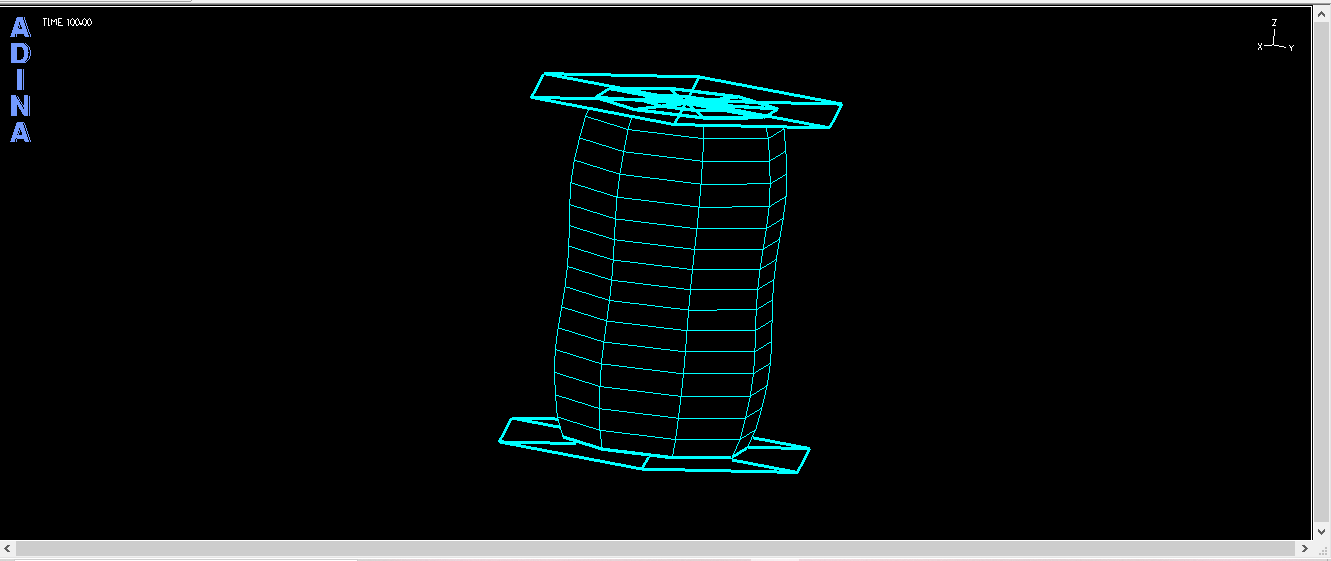
Deformed specimen mesh in between platen meshes.
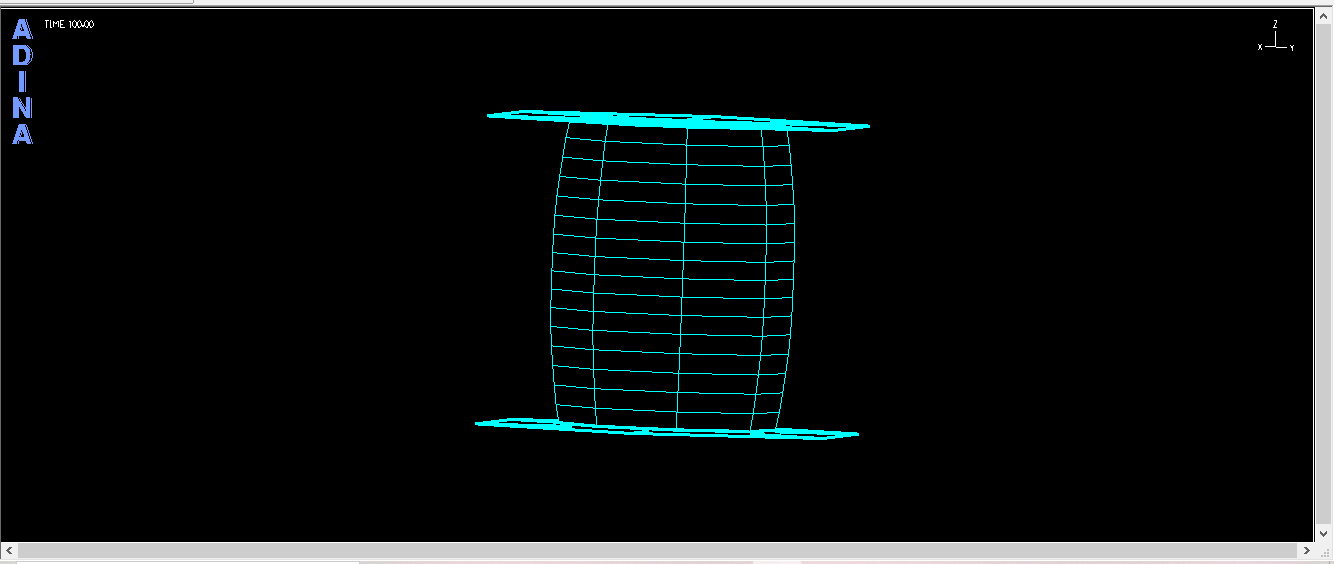
Deformed Mesh of Specimen.
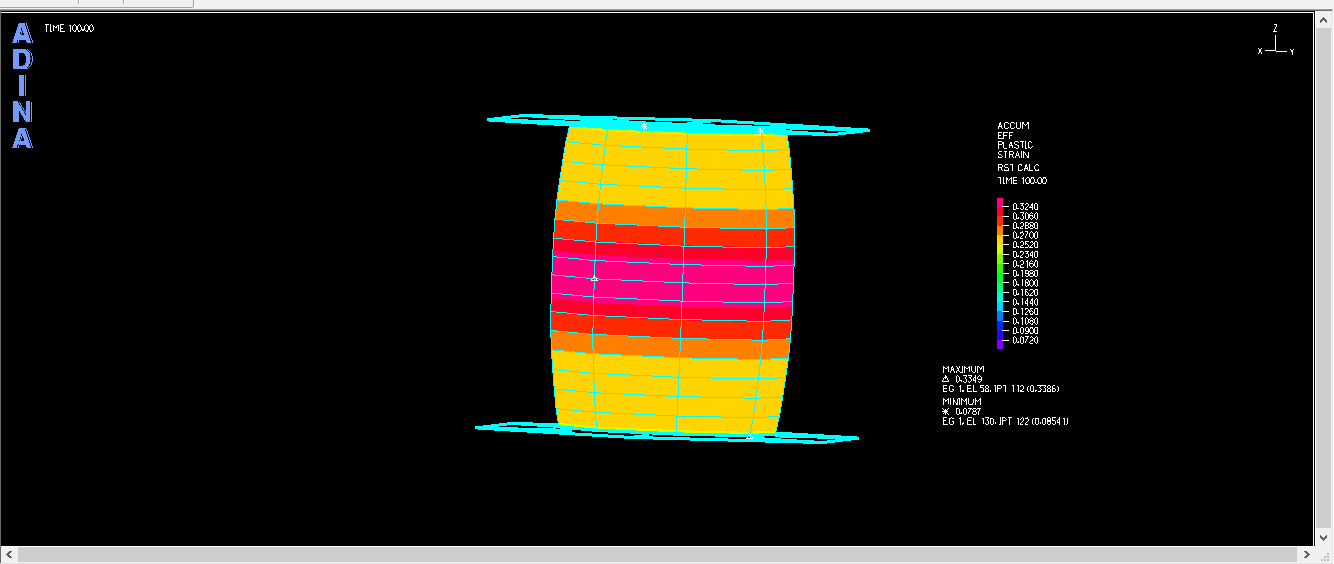
Plastic Strain of Specimen.
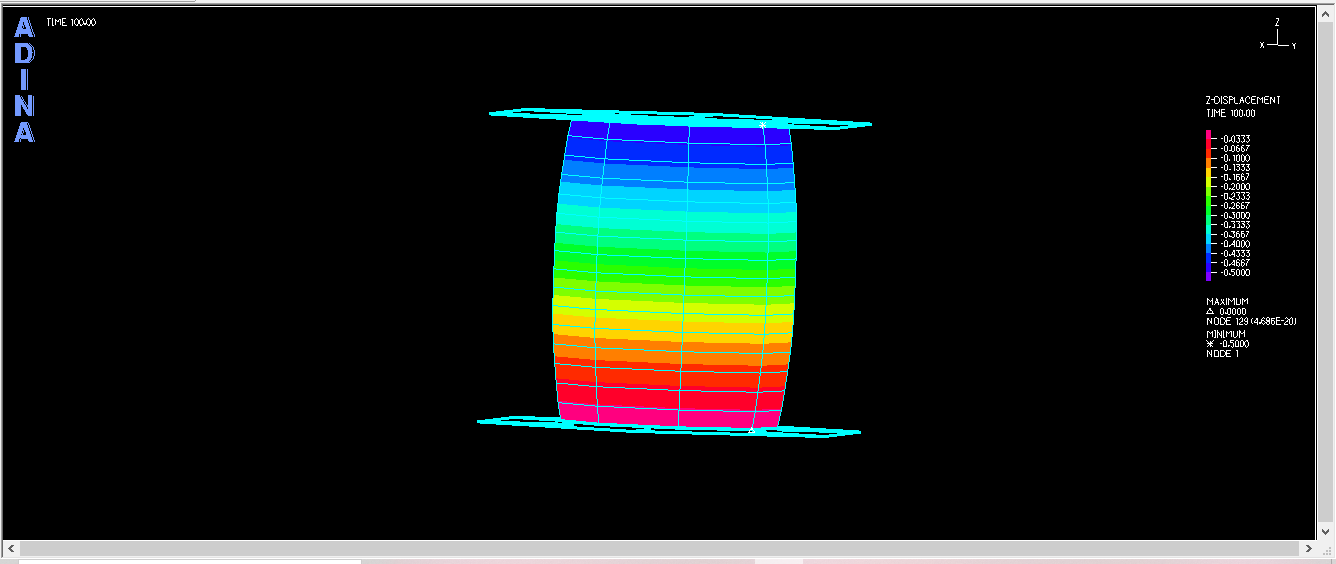
Vertical Displacement of Specimen.
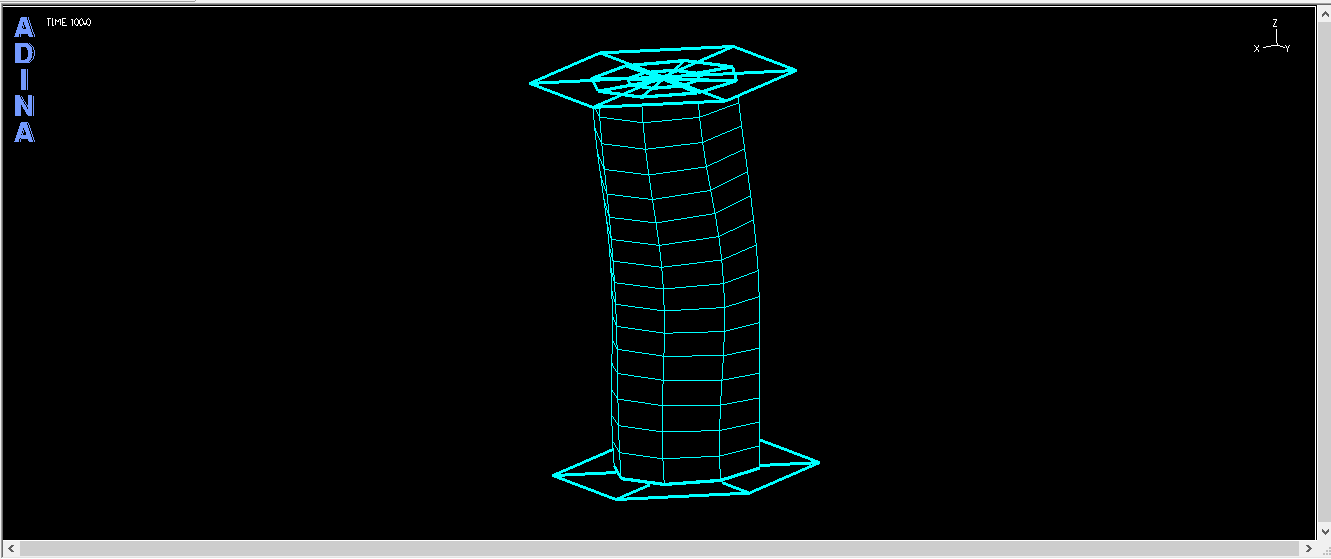
Deformed Mesh of Tall Slender Specimen.
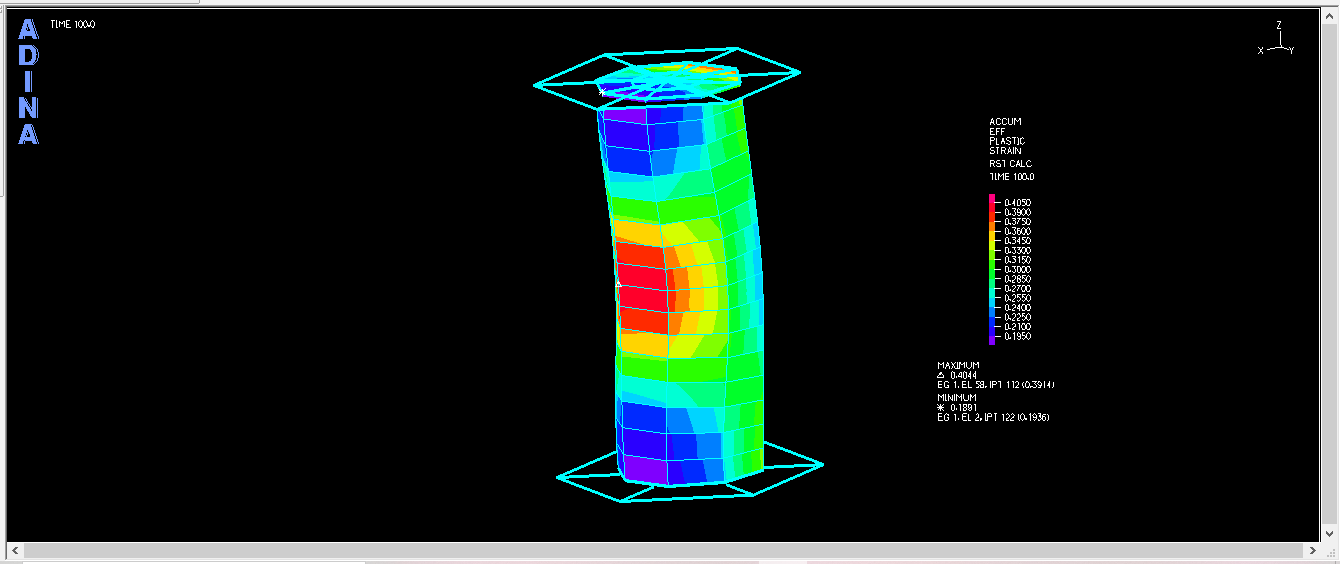
Plastic Strain in Buckled Slender Specimen.
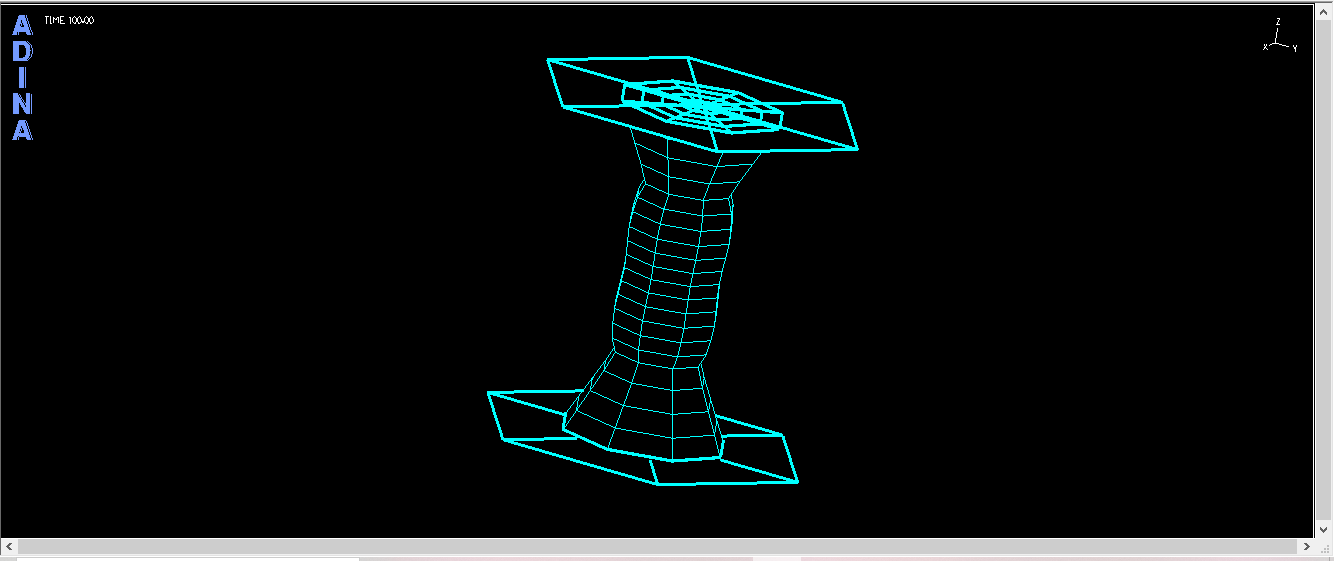
Deformed Mesh of Compression Specimen with Tapered Ends.
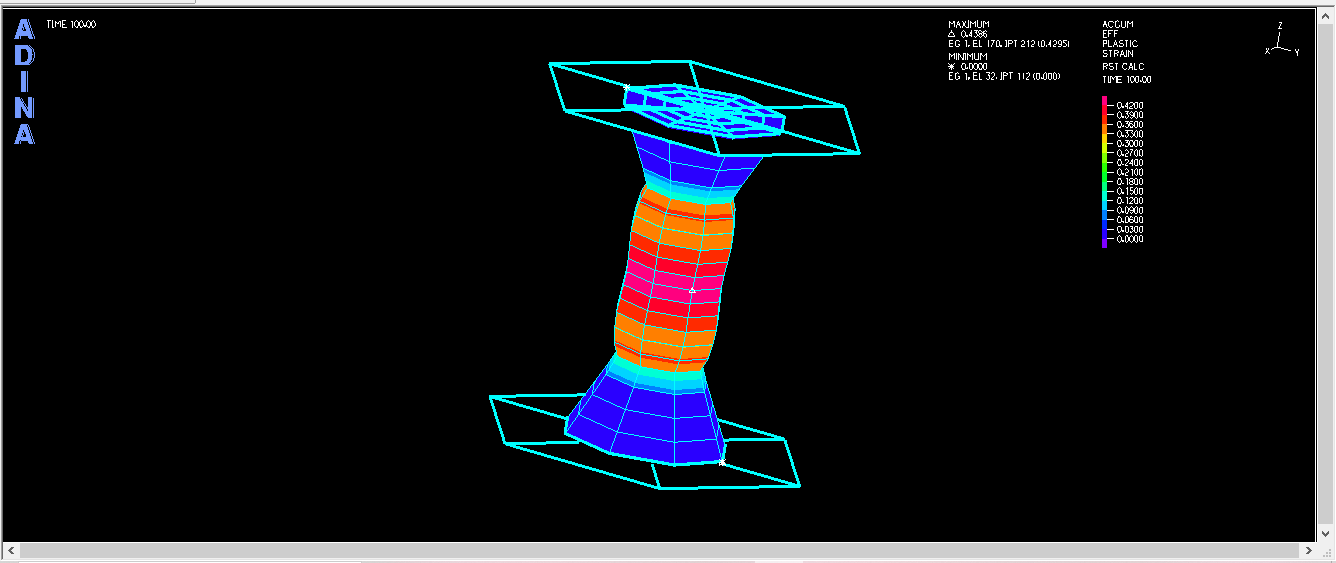
Plastic Strain of Compression Specimen with Tapered Ends
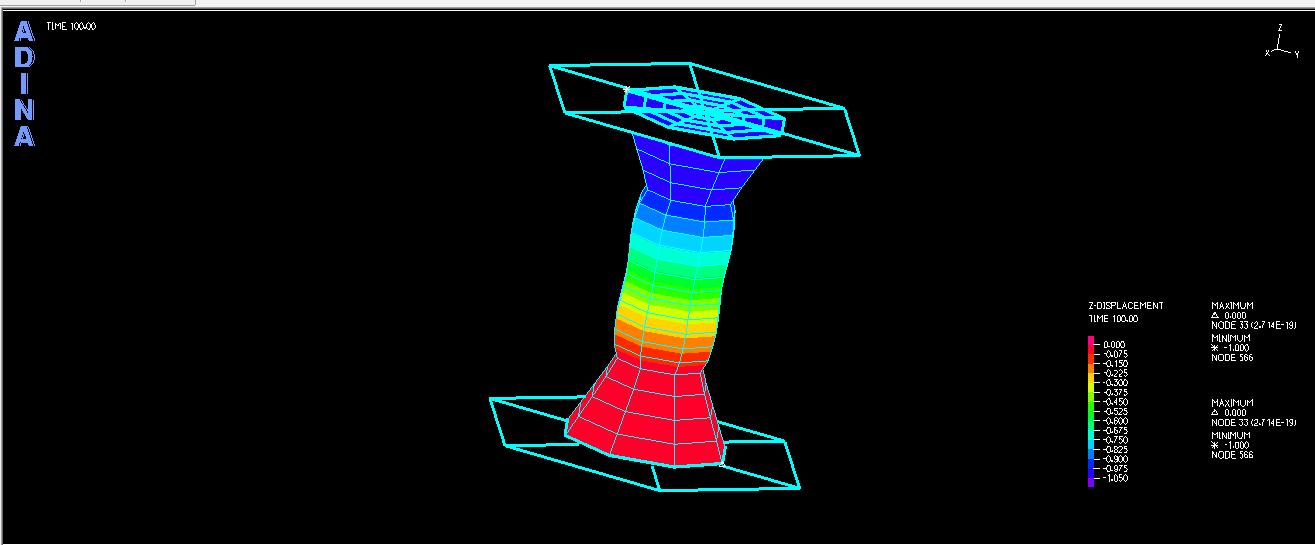
Vertical Displacement of Compression Specimen with Tapered Ends
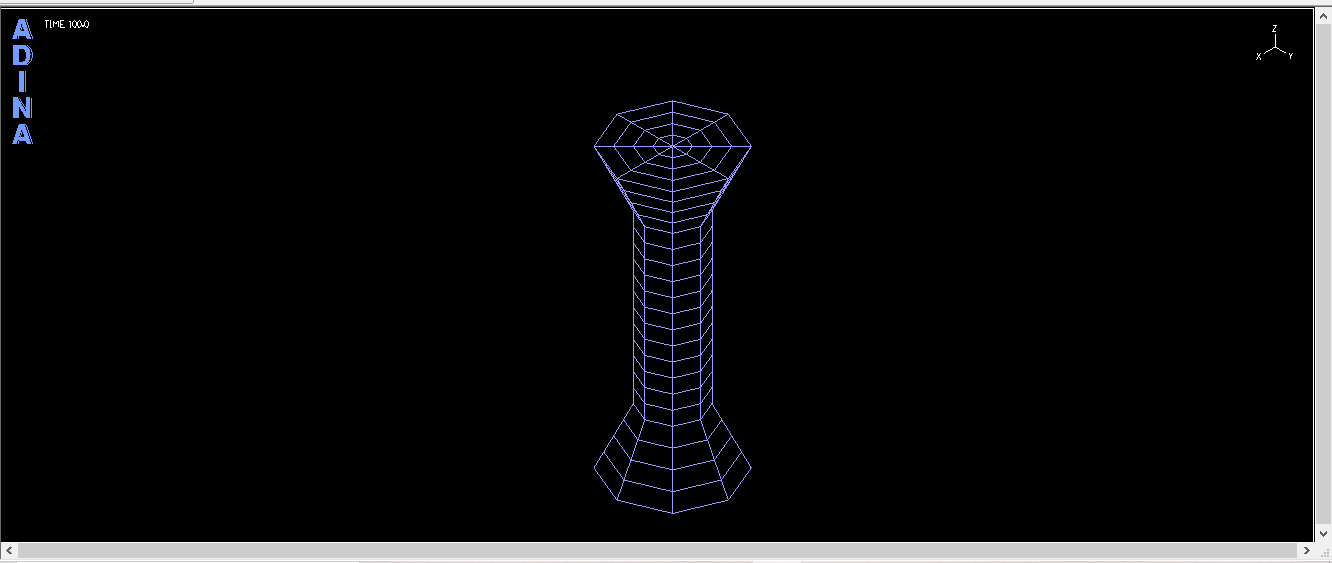
Original Mesh of tapered tension specimen.
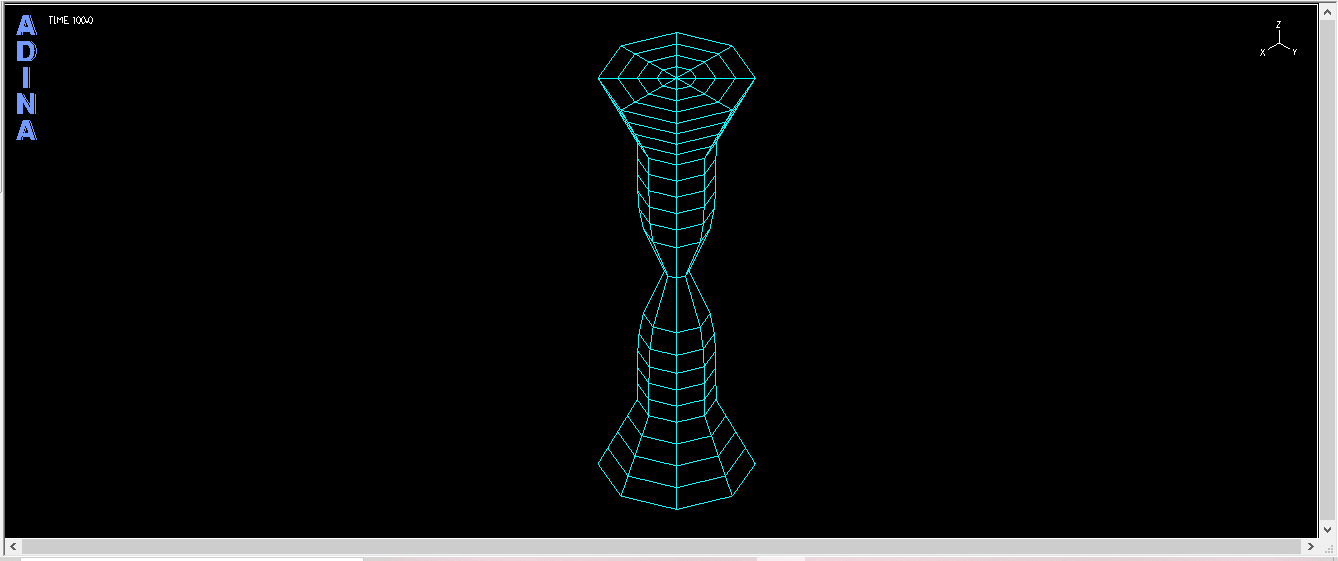
Deformed Mesh of Tapered Tension Specimen.
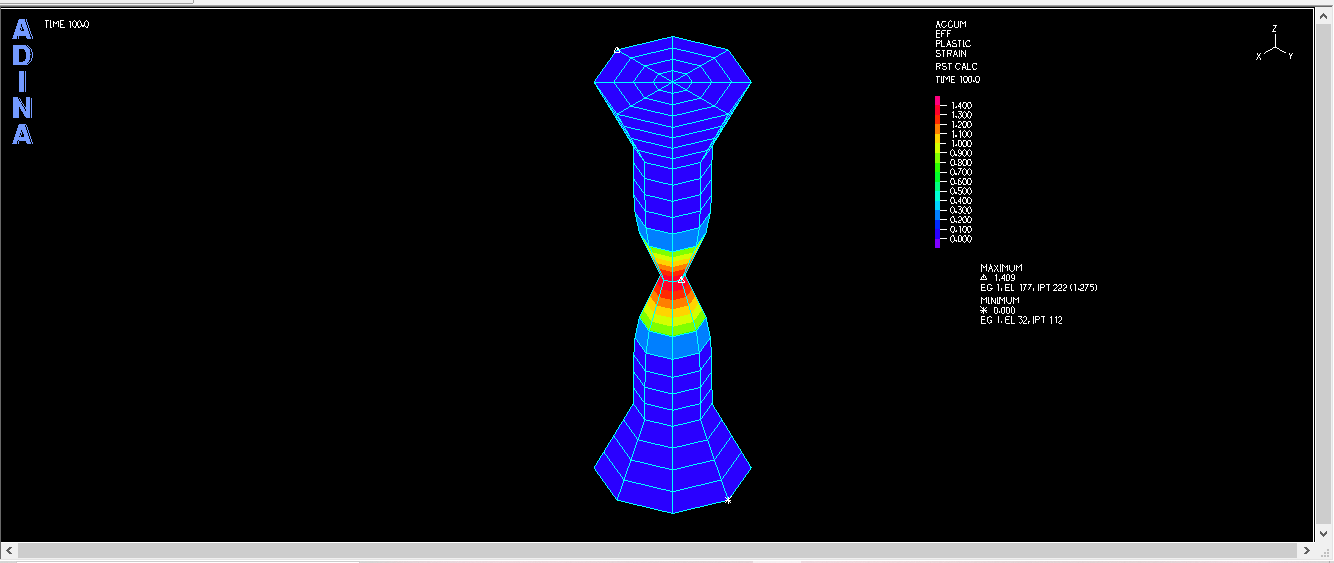
Plastic Strain with Necking in Tension Specimen with Tapered EndsP
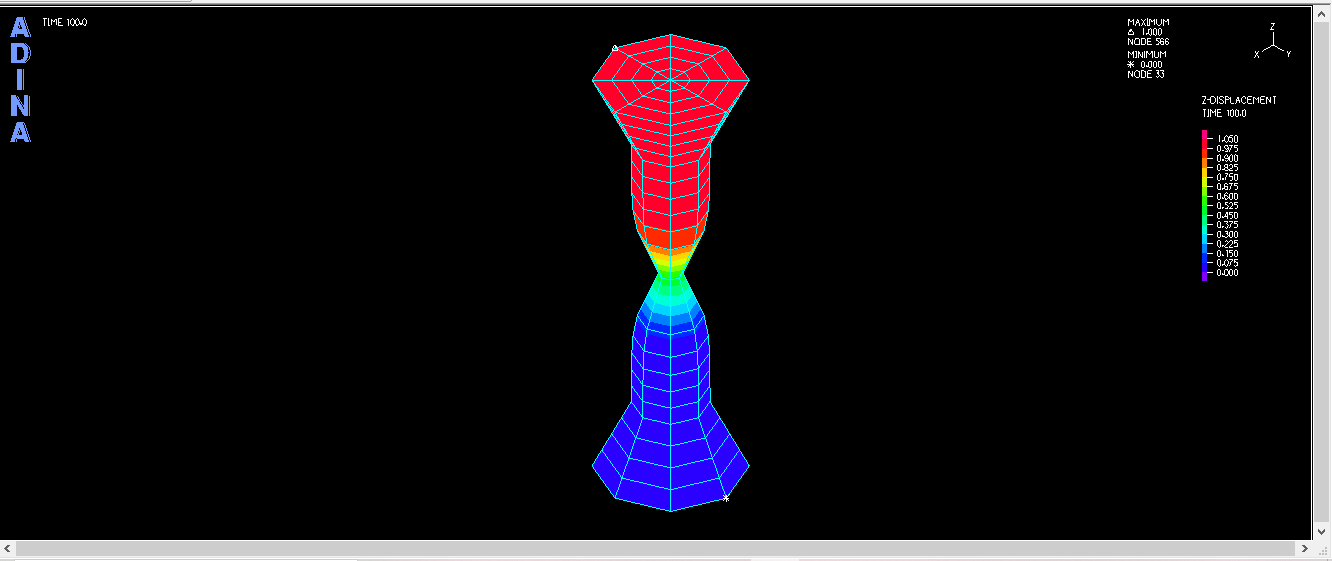
Vertical Displacement in Tapered Tension Specimen.