McMullen Engineering

Computational Fluid Dynamics (CFD) Models
Two of the best courses I have ever taken were "Introduction to Computational Fluid Dynamics" and "Advanced Computational Dynamics" offered as AIAA Continuing Education courses. Both courses were taught by Dr. Klaus Hoffmann. The author benefitted greatly from participating in these courses. Assignments were very challenging and required the development of a number of algorithms to solve fluid flow problems.
I originally wrote a Fortran program for a driven cavity as an assignment in the AIAA course. Subsequently I ported this program to C++. Results are given on this page. The same model was also run with Ansys-Fluent, Adina, and OpenFoam software. Plotting of OpenFoam solutions was completed with Paraview software. Results were the same using four different software packages providing validation of solutions.
Software Links
Ansys - Fluent Software
OpenFOAM Software
Paraview Software
This page also includes Ansys-Fluent solutions for turbulent flow in an inclined pipe. I used this model to teach students in my classes about flowing wells.
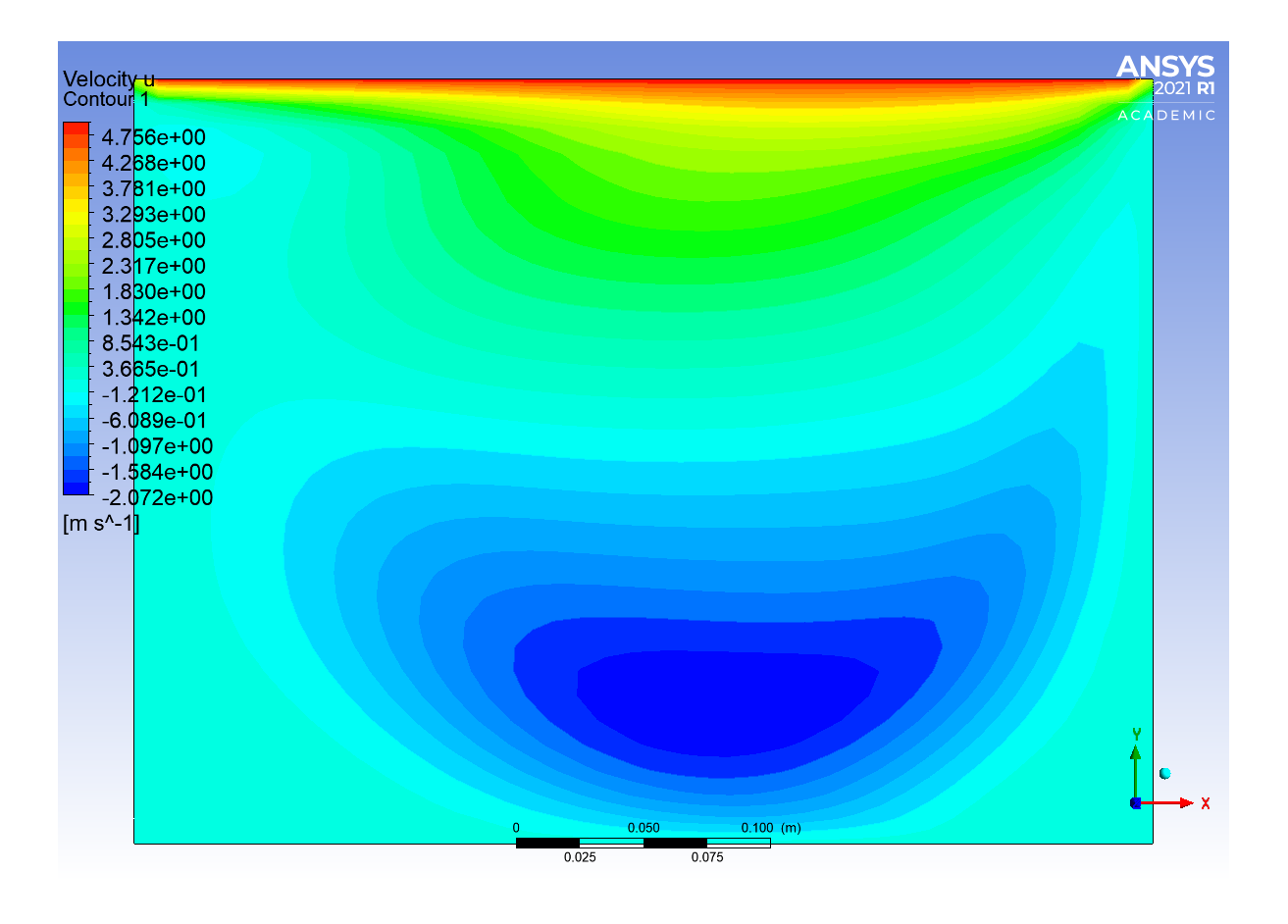
Ansys-Fluent X velocity solution for driven cavity. This is a classic CFD problen suitable for validation of CFD algorithms.
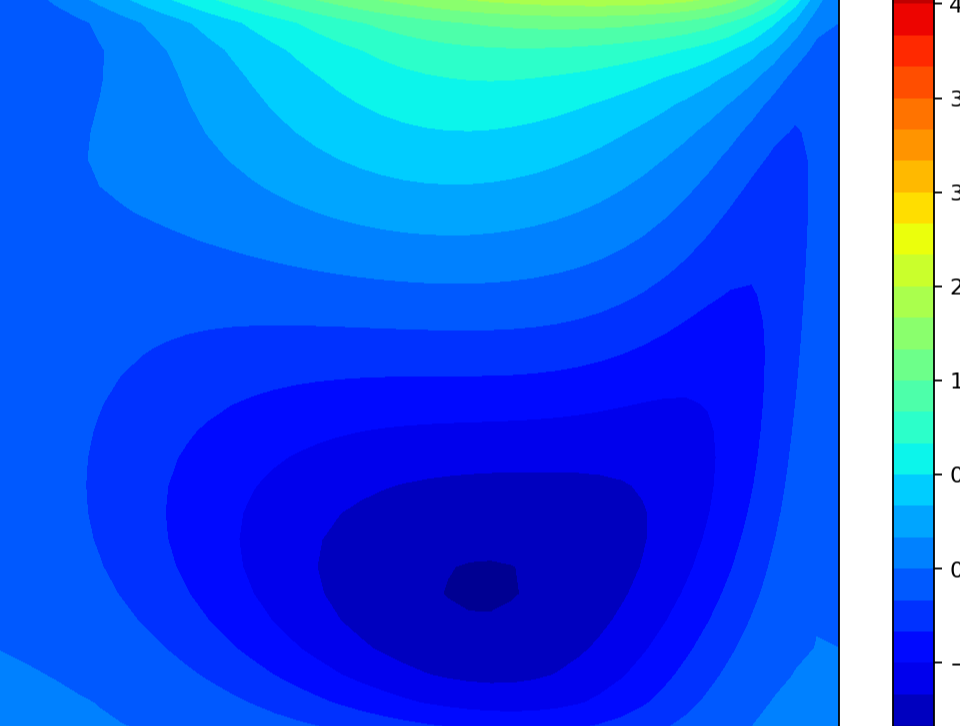
I converted my Fortran program for a driven cavity, developed during the AIAA course, to C++ to produce this image. I also developed a new Python program to plot solutions from my software. The X velocty solution from my driven cavity program is plotted using my Python plotting software.
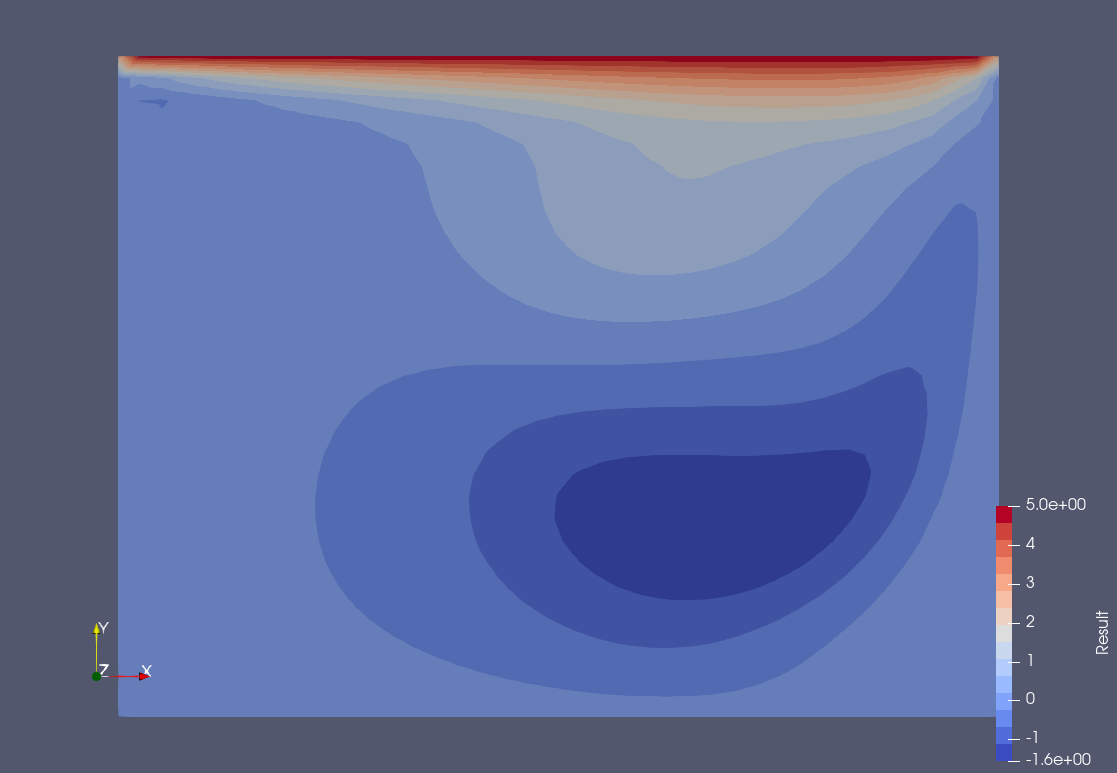
Driven Cavity X velocity solution produced by OpenFoam software and plotted with Paraview.
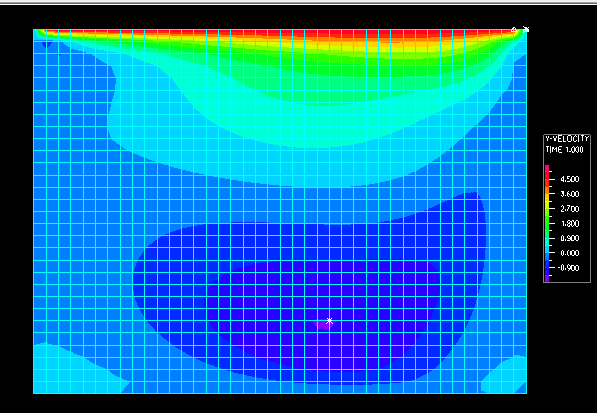
Driven Cavity X velocity solution produced by Adina software.
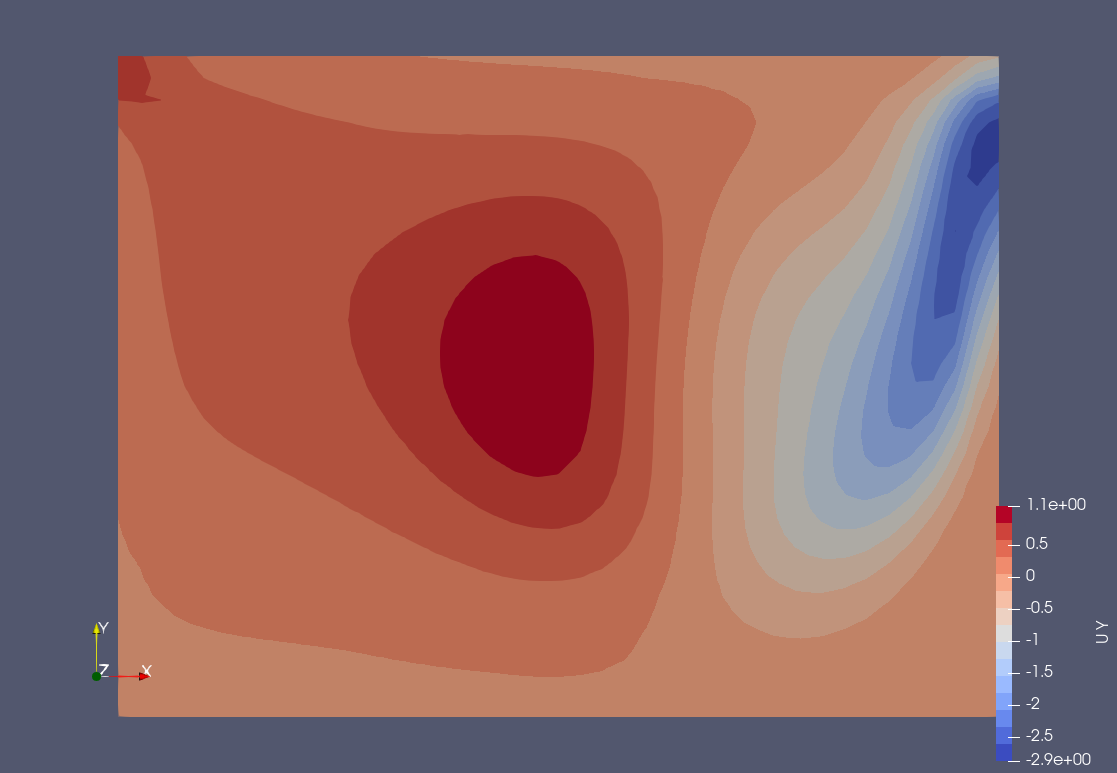
Driven Cavity Y velocity solution produced by OpenFoam software and plotted with Paraview.

Driven Cavity pressure solution produced by OpenFoam software and plotted with Paraview.
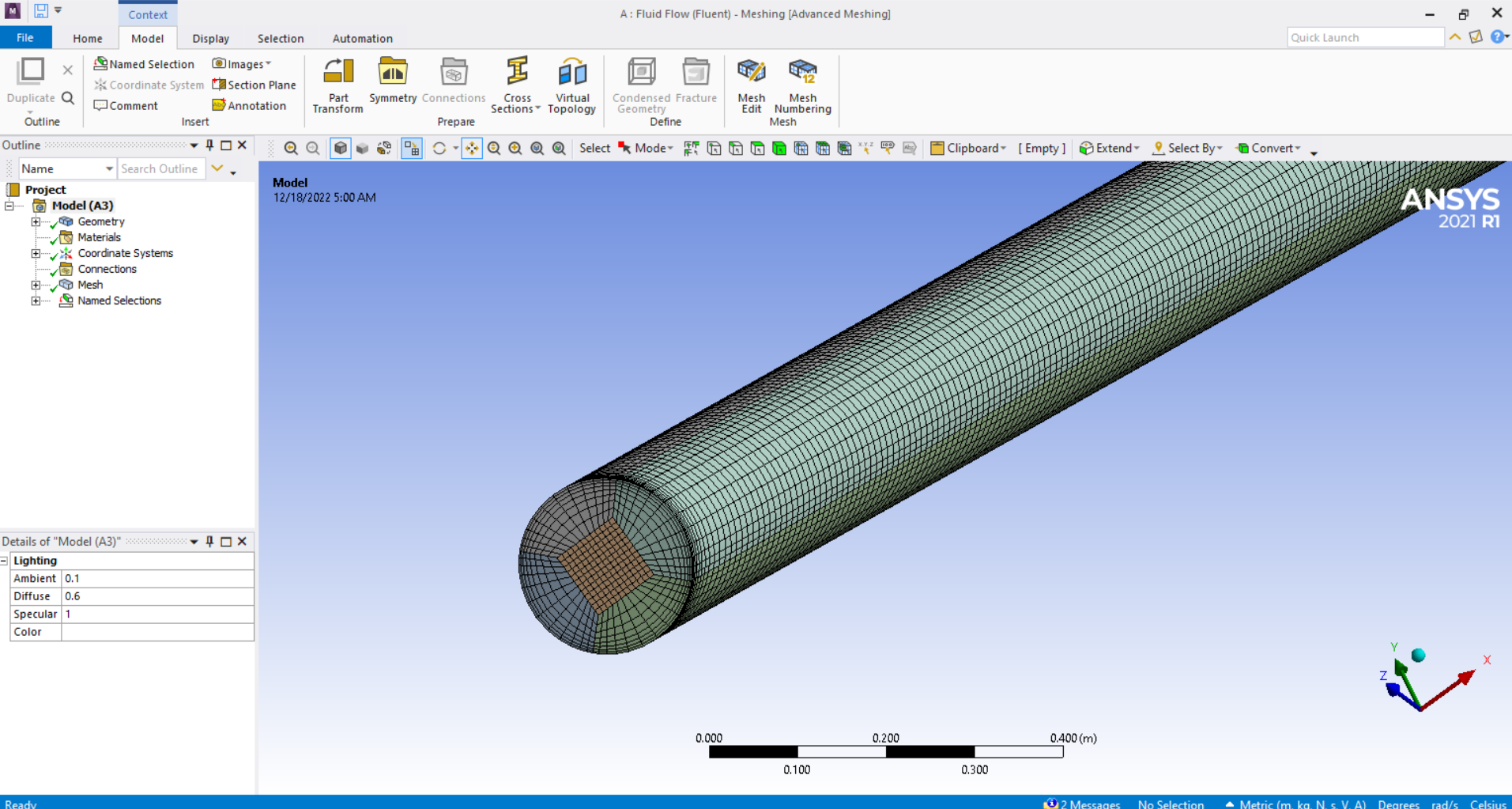
Ansys-Fluent mesh for inclined pipe model. Note refinement at the boundary.
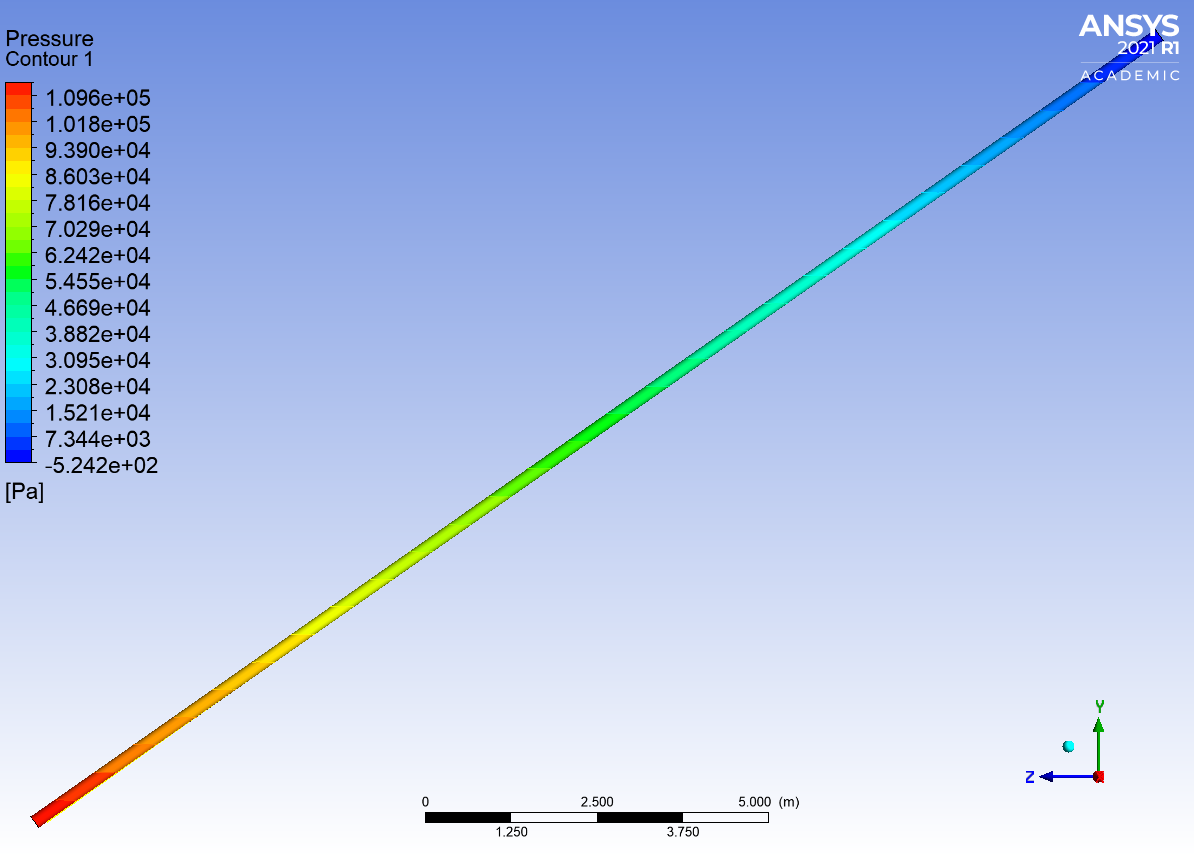
Ansys-Fluent inclined pipe model which I used to teach mechanical engineering students about pressure differences necessary to bring fluids to the surface. Understanding this concept is useful for helping students understand drilling and production in the oil industry.
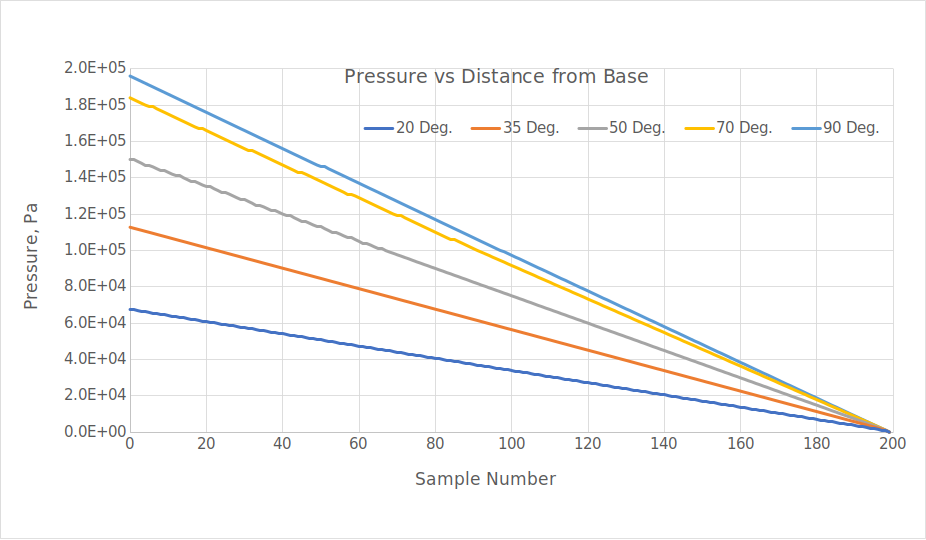
Pressure Difference vs Distance from Base profiles for the pipe inclined at different angles.
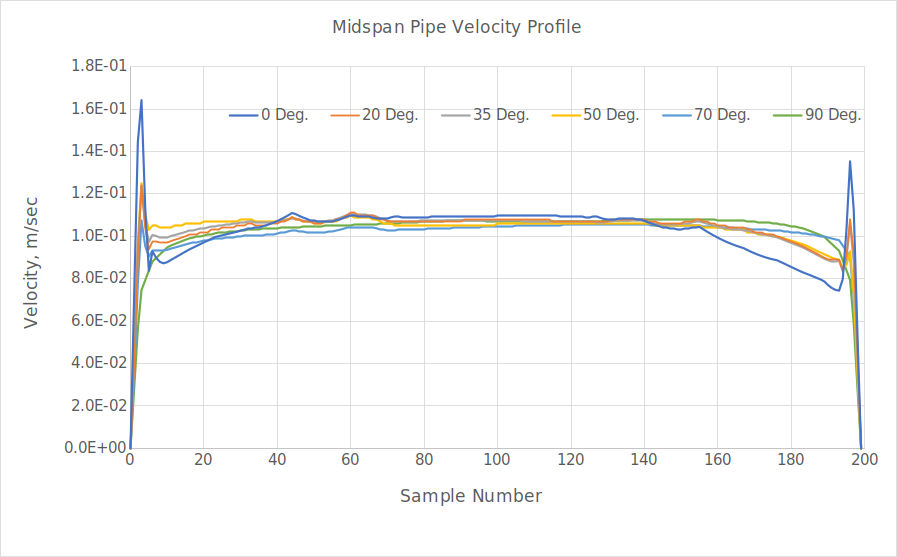
Ansys-Fluent midspan velocity profile for an inclined pipe with turbulent flow.